

The Corporate Planner's Guide to Group Transportation in the Wasatch Front

When you're coordinating group transportation for a corporate event in the Wasatch Front, the margin for error is razor-thin. Whether you're moving 80 convention attendees from the Salt Palace Convention Center to a dinner venue in Sugar House, shuttling a tech company's new hires between a Draper office and Salt Lake City Airport, or running a VIP executive retreat in Park City — one late bus or wrong vehicle can unravel hours of careful planning.
This guide is built for corporate event planners, executive assistants, HR managers, and operations leads who need to move groups efficiently, professionally, and without surprises across Salt Lake, Utah County, and the surrounding Wasatch Front.
We'll cover everything from choosing the right vehicle to navigating the specific logistics of Utah's most common corporate venues — so you can plan with confidence and execute without stress.
Why the Wasatch Front Presents Unique Transportation Challenges
Salt Lake City and the broader Wasatch Front corridor sit at the intersection of a booming tech economy, a major convention market, and some of the most geographically complex terrain in the American West.
Silicon Slopes — the stretch of tech companies spanning Lehi, Draper, South Jordan, and South Salt Lake — is now home to hundreds of major employers including Adobe, Qualtrics, Domo, and Ancestry.com. The corridor generates significant demand for corporate shuttles, employee commuter services, and group event transportation, but its rapid growth has also made I-15 congestion a genuine logistical factor that any transportation plan must account for.
Salt Lake City's convention market generates over a billion dollars in annual economic activity, with the Salt Palace Convention Center and Mountain America Expo Center hosting hundreds of national and regional events each year. Both venues have specific bus staging requirements that corporate planners must understand before booking.
Park City — 30 to 45 minutes from downtown Salt Lake via I-80 — hosts a growing number of corporate retreats, executive conferences, and incentive events. But its mountain location, narrow canyon roads, and limited bus access on Main Street create logistics constraints that catch out-of-market planners off guard.
Add Utah's winter weather — which can affect canyon routes to Park City and mountain resorts with little notice — and you have a transportation environment that rewards local expertise and punishes last-minute planning.
Step 1: Define Exactly What You Need Before You Call Anyone
The most common mistake corporate planners make when booking group transportation is reaching out to providers before they've fully defined the scope of the job. Vague requests lead to mismatched vehicles, incorrect headcount estimates, and quotes that don't reflect the actual service required.
Before you contact a single provider, lock down the following:
Headcount: Get your confirmed RSVP count, then add 10% buffer. Groups almost always run over or have last-minute additions. It's far easier to book for 55 and have 48 show up than to book for 45 and scramble for a second vehicle at 7am.
All pickup and drop-off locations: List every stop, including hotel lobbies, office campuses, airport terminals, and venue entrances. Confirm exact addresses — "the Qualtrics office" and "the Qualtrics main campus entrance on Adobe Way" are very different instructions for a driver navigating an unfamiliar area.
Trip type: Are you doing a single A-to-B transfer, a shuttle loop with continuous service, or a full-day charter following your group through multiple stops? These require completely different vehicles, pricing structures, and driver arrangements.
Timing: When do guests need to arrive — not depart? Work backward from your event start time. Build in 15 minutes of buffer for boarding and 20–30 minutes if your route crosses I-15 during peak commute hours (7–9am and 4–6pm).
Special requirements: Note any ADA accessibility needs, VIP groups requiring a separate premium vehicle, or passengers with special considerations (motion sickness on canyon roads, mobility aids, etc.).
Step 2: Match the Right Vehicle to Your Group
One of the most practical decisions you'll make is vehicle selection. Here's a straightforward breakdown for Wasatch Front corporate events:
Sprinter Van / Executive Minivan (12–14 passengers) Best for: VIP airport transfers, executive shuttles, small team outings. The most premium feel per passenger, with leather seating and climate control. Ideal when presentation matters as much as capacity.
Minibus (20–30 passengers) Best for: Mid-size corporate groups, hotel-to-venue loops, off-site meeting shuttles. The workhorse of corporate event transportation. Easier to park and maneuver in urban Salt Lake locations than a full coach.
Charter Coach (40–56 passengers) Best for: Convention shuttles, large corporate dinners, full-day charters. Most coaches include WiFi, reclining seats, overhead storage, and restrooms — making them the preferred option for trips over 45 minutes. The standard for professional group transportation in Salt Lake City.
Double-booking / Fleet Solution (80+ passengers) Best for: Large conventions, company-wide events, multi-hotel pickup scenarios. Requires significantly more lead time — 2–3 weeks minimum — and careful staging coordination with your venue.
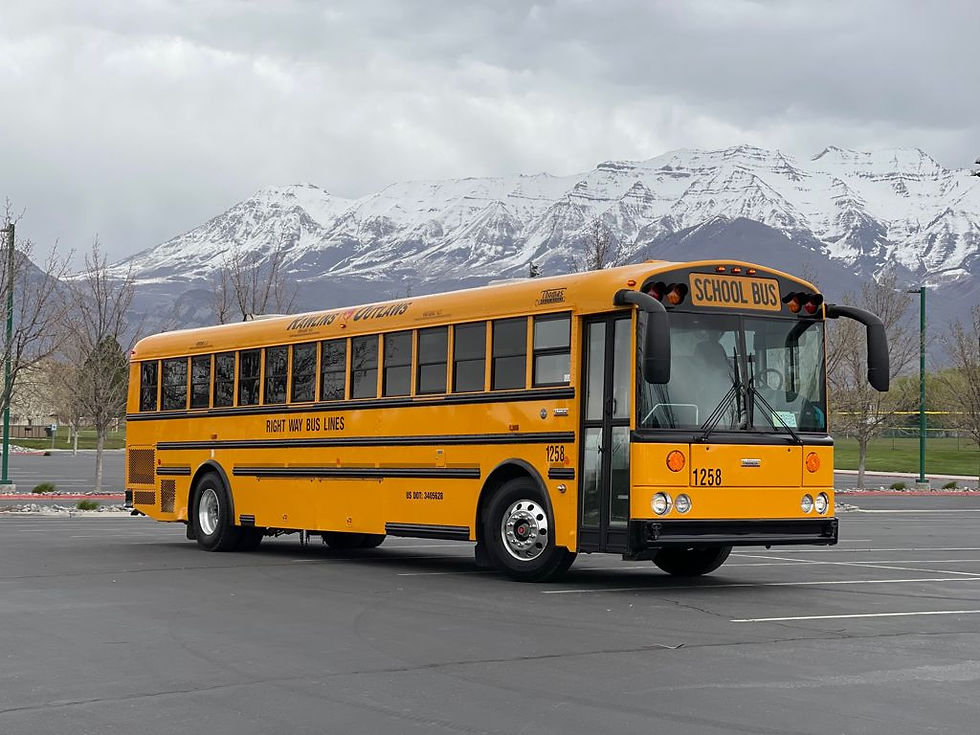
Economy School Bus Best for: Budget-conscious local moves where comfort is secondary. Works well for casual company outings, volunteer events, or moving large groups short distances. Not appropriate for client-facing or VIP events.
Key rule of thumb: If your attendees are clients, executives, or people you're trying to impress, go charter coach at minimum. If it's an internal team and budget is tight, a minibus or school bus may serve perfectly well.
Step 3: Vet Your Transportation Provider — Thoroughly
The Wasatch Front has no shortage of transportation companies. Quality varies significantly. For corporate events — where your professional reputation is on the line — cutting corners on provider vetting is a risk not worth taking.
UDOT Operating Authority Any company transporting passengers for compensation in Utah must hold valid Motor Carrier operating authority from the Utah Department of Transportation. Ask every provider for their MC number and verify it at udot.utah.gov. This takes two minutes and immediately separates legitimate operators from those who shouldn't be on the road.
Commercial Insurance Request a certificate of insurance showing commercial general liability coverage. For corporate events and convention transportation, most venues — including the Salt Palace — require proof of insurance on file before a vehicle can stage on property. Industry standard for professional corporate transport is $5 million per occurrence minimum.
Driver Credentials All drivers operating passenger vehicles commercially must hold a Commercial Driver's License (CDL) with passenger endorsement. Ask specifically whether drivers are employees of the company or independent contractors, and confirm that background checks and drug testing are part of the company's standard process. This matters for your corporate liability exposure.
GPS Tracking & Dispatch Support For shuttle loops, multi-stop events, or large conventions, real-time GPS tracking on vehicles is a significant operational advantage. It lets you or your on-site coordinator know exactly where each bus is — critical when you have attendees scattered across multiple hotels. Confirm that 24/7 dispatch support is available on event day, not just during business hours.
References Ask specifically for references from corporate or convention clients of similar size. A company that primarily does school trips or weddings may not have the operational capacity or professionalism standard your event requires.
Step 4: Get the Contract Right
Many corporate transportation problems are contract problems in disguise. A vague or
incomplete agreement leads to overtime disputes, unexpected charges, and day-of misunderstandings about exactly what was booked.
Your contract should specify, in writing:
Exact vehicle type and passenger capacity
All pickup and drop-off addresses with arrival times
Driver name (or confirmation that a named driver will be assigned)
Base rate, fuel surcharge, and any additional fees itemized separately
Gratuity policy — is it included, or expected separately? Industry standard is 15–20% of the trip cost
Overtime rate — what is the per-hour charge if your event runs long? This is the most common source of billing surprises
Cancellation and modification terms — how much notice is required to change headcount or timing without penalty?
Force majeure language covering weather events — relevant for winter events near mountain venues
Get all of this confirmed in writing before signing anything. If a provider is reluctant to put terms in writing, that's a signal to keep looking.
Step 5: Wasatch Front Venue Logistics — What Corporate Planners Need to Know
Each major corporate venue in the Wasatch Front has its own staging and access requirements. Here's a quick-reference breakdown:
Salt Palace Convention Center (Salt Lake City)
Bus staging occurs along West Temple Street. The Salt Palace has designated load/unload windows that must be coordinated with venue operations — particularly for large conventions where multiple carriers are working simultaneously. Confirm your staging slot in advance, and make sure your driver knows which entrance is designated for group arrivals. The convention center requires proof of carrier insurance on file before event day.
Mountain America Expo Center (Sandy)
Easier access than the Salt Palace for groups coming from Utah County or the south valley. Large surface lot with clear bus access. Confirm the designated entrance for your specific event — the expo center hosts multiple simultaneous events on peak convention days. I-15 access from both Salt Lake and Utah County is straightforward.
Park City (Main Street & Resort Properties)
Main Street has no bus parking. Period. Vehicles must use designated shuttle stops or drop passengers and relocate. For resort events at Deer Valley, Canyons Village, or Snowbird, confirm that your vehicle is appropriately sized for canyon roads — very large coaches have restrictions on some mountain routes. Travel time from Salt Lake City is 30–45 minutes in normal conditions; add 15–20 minutes during ski season or inclement weather. Always check UDOT road conditions before event day for I-80 canyon routes.
Silicon Slopes (Lehi / Draper / South Jordan)
High campus density makes this corridor ideal for shuttle loop operations, but I-15 between Salt Lake and Utah County is heavily congested during morning (7–9am) and evening (4–6pm) commute windows. Build buffer into any Silicon Slopes pickup or drop-off during those times. For recurring employee shuttles, flat-rate monthly contracts are available from most providers and significantly reduce per-trip costs.
Salt Lake City International Airport
Charter vehicle pickups require coordination with airport ground transportation — do not assume a bus can stage at the curb. Most group pickups occur in the cell phone lot or a pre-arranged commercial vehicle staging area. For large groups arriving on multiple flights, stagger pickup times and have your driver in contact with a designated group coordinator inside the terminal.
Alta / Snowbird / Solitude (Little Cottonwood & Big Cottonwood Canyons)
Narrow canyon roads with vehicle length and weight limits. Chain requirements are enforced by UDOT between approximately October and April. Confirm that your transportation provider has canyon-experienced drivers and appropriate vehicles before booking any resort event in winter months. These routes are non-negotiable about vehicle compliance — buses that don't meet requirements will be turned back.
Step 6: Running a Flawless Event Day
Even the best-planned transportation can unravel on event day without proper on-site execution. Here's what separates smooth operations from chaotic ones:
Designate one internal coordinator. This is the single most impactful thing you can do. One person — not five people texting the driver simultaneously — maintains contact with dispatch and communicates any changes. Give that person the driver's direct cell number and test it the morning of the event.
Build in 15 minutes of loading buffer. Groups take longer to board than you expect. Always. Build this into your departure times rather than trying to make it up en route.
Communicate with attendees proactively. Send a message the evening before with exact pickup location, boarding time, and what to do if they're running late. Include the coordinator's number. This eliminates the most common source of last-minute scramble.
Headcount before every departure. Assign a "last person" — someone responsible for doing a final sweep before the bus leaves each stop. Don't rely on the driver for this; it's an event planner responsibility.
Have a contingency plan. What happens if the bus is delayed 30 minutes? What if a passenger needs to leave early? What if weather closes a mountain route? Think through the top two or three failure scenarios and have a basic response plan for each.

Why Local Expertise Matters for Wasatch Front Transportation
There's a meaningful difference between hiring a national booking platform that dispatches whoever's available and working with a transportation company that operates in the Wasatch Front every day.
Local providers know which Salt Palace entrance to use for a 7pm dinner pickup. They know that Little Cottonwood Canyon can be shut down in 20 minutes by a storm that wasn't in the morning forecast. They have relationships with venue operations teams. They know the detours around I-15 construction and which surface streets actually save time.
For high-stakes corporate events, local knowledge isn't a nice-to-have — it's a practical advantage that directly affects whether your attendees arrive on time and your event runs smoothly.
Free Download: The Corporate Planner's Transportation Checklist
We've distilled everything in this guide into a free, professional PDF checklist — including a vehicle comparison table, Wasatch Front venue quick reference, contract red flags to watch for, and a complete event-day execution checklist.
[Download the Free Corporate Transportation Guide →]
Use it for your next event, share it with your team, or keep it on file as a planning reference
for the full corporate event season.
Frequently Asked Questions: Corporate Transportation in Salt Lake City & the Wasatch Front
How far in advance should I book corporate transportation in Salt Lake City? For single-vehicle bookings, 3–5 business days is the minimum — but 1–2 weeks is far safer. For multi-vehicle convention shuttles or large events, book 2–4 weeks out. During peak convention season (March–May and September–November) and winter ski season, lead times increase.
What does corporate charter bus rental cost in Salt Lake City? Rates vary significantly based on vehicle type, trip duration, and timing. A rough benchmark: minibuses typically run $90–$150/hour, full-size charter coaches $130–$200/hour, with minimums usually in the 3–4 hour range. Always get an itemized quote — base rate, fuel surcharge, and gratuity should be listed separately.
Can I book recurring employee shuttle service for our Silicon Slopes office? Yes — and for companies with consistent daily or weekly shuttle needs, a flat-rate monthly contract is almost always more cost-effective than booking trip-by-trip. Most reputable Wasatch Front providers offer these arrangements. Ask specifically about dedicated driver assignments and priority scheduling.
Is charter bus transportation available for Park City resort events? Absolutely, but the logistics are more complex than a downtown Salt Lake booking. Vehicle size restrictions on canyon roads, chain requirements in winter, and limited staging options on Park City's Main Street all require careful advance planning. Work with a provider that has specific experience on these routes.
What insurance do I need from my transportation provider for a convention at the Salt Palace? The Salt Palace Convention Center requires carriers to carry commercial liability insurance and may require a certificate of insurance naming the venue as an additional insured. Request this document from your provider at least one week before your event and submit it to the venue's operations team in advance.
Do you provide ADA-accessible vehicles for corporate events? ADA-accessible vehicles with wheelchair lifts and additional handrailing are available through most professional Wasatch Front transportation companies. Request this specifically at the time of booking — don't assume a standard coach will be equipped.


Comments